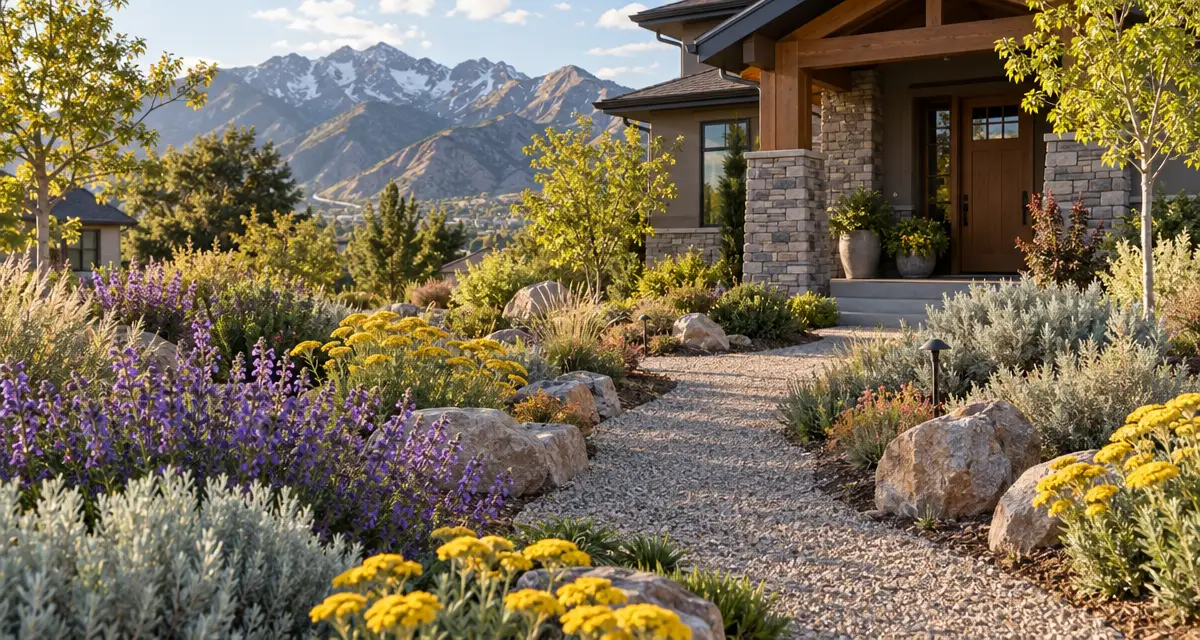
Creating a beautiful, thriving garden in the Greater Salt Lake City area means choosing plants that can handle our unique climate. The best options are drought-tolerant plants that are adapted to intense sun, low humidity, and alkaline soils. By selecting the right species, you can enjoy a stunning landscape that uses less water and requires less maintenance.
Why Choose Drought-Tolerant Plants in Salt Lake City?
Choosing plants adapted to dry conditions is one of the smartest decisions a Utah homeowner can make. Our region experiences intense sun, low seasonal precipitation, and drying winds, which can be tough on traditional, thirsty plants. A garden filled with drought-tolerant species offers numerous benefits.
First and foremost is water conservation. With water being a precious resource along the Wasatch Front, reducing outdoor water use is both environmentally and economically responsible. A water-wise landscape can significantly lower your water bills and help conserve community resources.
These plants also mean less work for you. Once established, they require minimal supplemental watering, fertilizing, and pest control. Because they are suited to our environment, they are naturally more resilient and self-sufficient. This frees you up to simply enjoy your yard rather than constantly tending to it. Finally, using native and adapted plants helps support local wildlife, providing food and shelter for birds, bees, and butterflies.
Understanding Salt Lake City's Unique Growing Conditions
Success in gardening starts with understanding your environment. The populated areas of Utah present a specific set of challenges that plants must endure. According to researchers at Utah State University, our local plants are well-suited to the area's soils, moisture levels, and temperatures.
The majority of soils in the Salt Lake Valley are alkaline, often with a pH around 8.0. Many common garden plants prefer acidic soil and will struggle to absorb nutrients here, leading to yellowing leaves and poor growth. Native and drought-tolerant plants, however, are perfectly adapted to alkaline conditions.
Furthermore, our climate is characterized by intense sunlight and very low humidity. This combination, along with periodic drying winds, quickly pulls moisture from both plants and soil. Selecting plants with features like waxy, silver, or fuzzy leaves—natural adaptations for conserving water—is key to building a resilient garden.
Top Drought-Tolerant Perennials for Sun
Perennials form the backbone of many garden beds, returning year after year. These selections provide vibrant color and texture while demanding very little water once they are established.
- Penstemon (Beardtongue): Many species of Penstemon are native to Utah. They produce beautiful, tall spikes of tubular flowers in shades of purple, pink, red, and blue. They are a favorite of hummingbirds and thrive in full sun and well-drained soil.
- Yarrow (Achillea millefolium): Yarrow is incredibly tough and forgiving. It features feathery, fern-like foliage and flat-topped clusters of flowers that bloom for months. While the native variety is typically white, cultivars are available in yellow, pink, and red.
- Blanket Flower (Gaillardia aristata): For a burst of bright, cheerful color, look no further than the Blanket Flower. These daisy-like flowers feature bold red and yellow patterns and bloom profusely from spring until fall. They love heat and sun and are unfazed by poor, dry soil.
- Hyssop (Agastache): Also known as Hummingbird Mint, this perennial offers fragrant foliage and long-lasting flower spikes that are magnets for pollinators. Varieties like 'Blue Fortune' are particularly hardy and produce a haze of purple-blue flowers all summer long.
Best Drought-Tolerant Shrubs for Local Gardens
Shrubs provide structure, privacy, and year-round interest in the landscape. The right drought-tolerant shrubs can anchor your garden beds and create a sense of permanence. The USU Extension provides excellent resources on trees and shrubs that perform well in Utah.
- Serviceberry (Amelanchier utahensis): A fantastic native shrub that offers something in every season. It has delicate white flowers in spring, edible berries in summer, brilliant fall color, and an interesting branch structure in winter.
- Manzanita (Arctostaphylos patula): This broadleaf evergreen provides valuable winter interest. It has distinctive reddish bark, leathery green leaves, and small, urn-shaped pink or white flowers in early spring. It requires excellent drainage and zero summer water once established.
- Three-leaf Sumac (Rhus trilobata): Also known as Skunkbush Sumac (don't worry, it only smells when the leaves are crushed), this is one of the toughest shrubs around. It is extremely drought-tolerant and explodes with fiery red and orange colors in the fall.
Recommended Drought-Tolerant Trees
Trees provide essential shade, which helps cool your home and creates a more comfortable outdoor space. They also offer a crucial vertical element in a garden design. When planting the right trees, you are making a long-term investment in your property's beauty and value.
- Gambel Oak (Quercus gambelii): This native oak is incredibly resilient and well-adapted to Utah's dry climate. It's a slow grower but forms a sturdy, picturesque tree that provides excellent habitat and food for wildlife. It's a true symbol of the Rocky Mountain region.
- Rocky Mountain Juniper (Juniperus scopulorum): An iconic evergreen of the West, this tree is perfect for creating privacy screens or as a standalone specimen. It comes in various shapes and sizes, from tall and narrow to broad and pyramidal, with foliage ranging from green to silver-blue.
Designing Your Water-Wise Garden
Choosing the right plants is only part of the equation. A successful water-wise garden also requires thoughtful design. Grouping plants with similar water needs together, a practice known as hydrozoning, makes watering more efficient.
Amending your soil with a small amount of compost can help with water retention, but avoid over-enriching the soil, as many native plants prefer lean conditions. Applying a 2-3 inch layer of wood mulch or gravel is crucial for suppressing weeds, conserving soil moisture, and regulating soil temperature.
If the process of selecting and arranging plants feels overwhelming, a professional landscape consultation can provide clarity and direction. A comprehensive professional landscape design ensures that your garden will be beautiful, functional, and perfectly suited to our Salt Lake City environment for years to come.
Frequently Asked Questions
How often do I need to water drought-tolerant plants?
During their first year, new plants need regular water to establish a deep root system. After that, most drought-tolerant plants only require deep, infrequent watering during the hottest, driest parts of summer. Many natives can thrive with just natural precipitation once established.
Are all native Utah plants drought-tolerant?
No, not all of them. Utah has diverse ecosystems, from wetlands to alpine peaks. While many Utah natives are drought-tolerant, it's important to choose plants that come from an environment similar to your garden's conditions of sun, soil, and elevation.
Can I have a colorful garden with low-water plants?
Absolutely! A water-wise garden can be incredibly vibrant. Plants like Blanket Flower, Penstemon, Hyssop, and a wide variety of succulents and ornamental grasses offer a full spectrum of color and texture throughout the seasons.
What if I need help choosing the right plants?
For expert guidance, it's best to consult with a professional landscape designer. At Alpina Studio, we specialize in creating landscapes that are tailored to your style and our local climate, ensuring you get the right plants in the right places.