
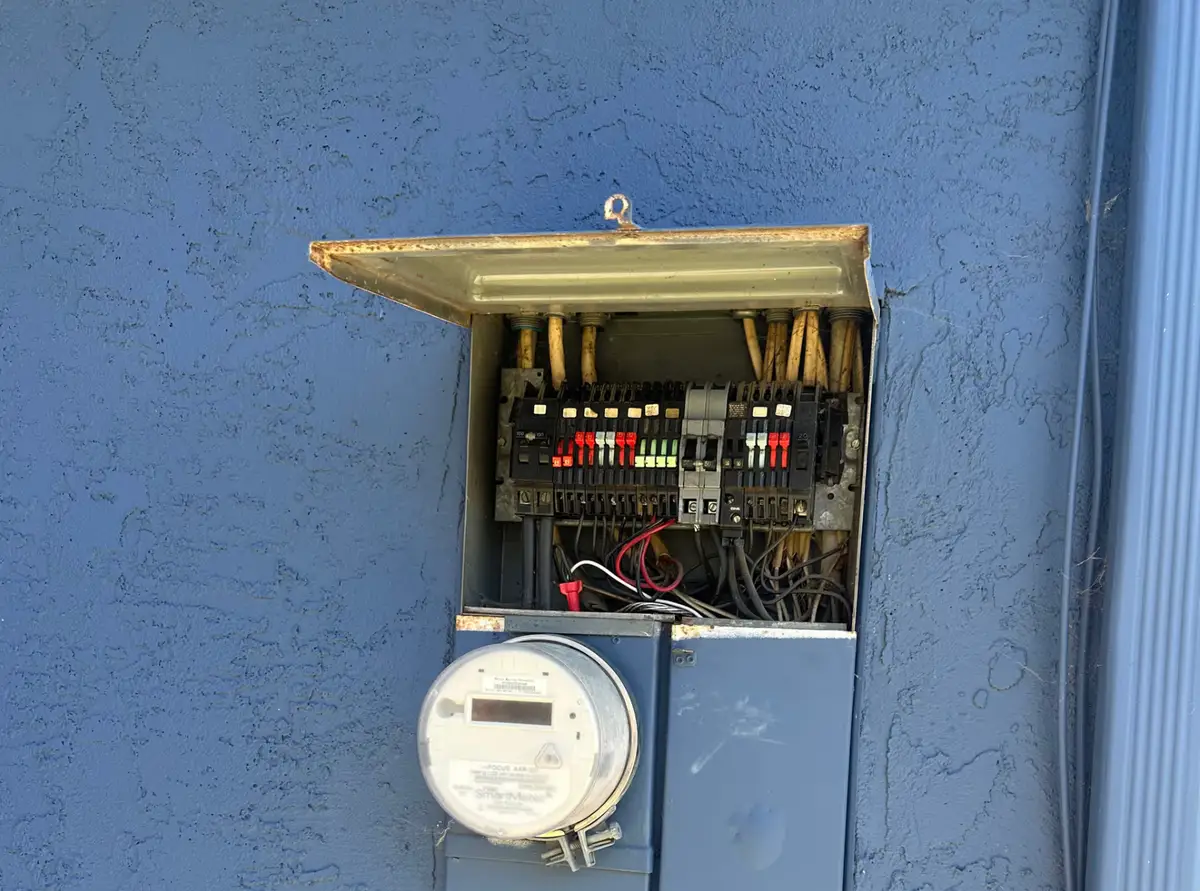
Whether your home can run both a central air conditioner and a Level 2 electric vehicle charger depends on your current electrical panel capacity in Rancho Cordova, CA. Most modern homes with a 200-amp main panel can support both appliances simultaneously, while older homes with 100-amp or 125-amp panels often require a load management device or a panel upgrade. A professional electrical load calculation is the safest way to know exactly how much power your system can handle before you install new equipment.
Understanding Electrical Panel Capacity in Rancho Cordova, CA
Your main electrical panel is the heart of your home's power system. It takes electricity from the utility lines and distributes it safely to your lights, outlets, and major appliances. Every panel has a maximum amperage rating, which is usually printed on the main breaker switch at the top of the box.
Many older neighborhoods in Rancho Cordova were built when families used far less electricity. Back then, a 100-amp or 125-amp panel was plenty for basic lighting, a refrigerator, and a television. Today, adding high-demand appliances on top of existing household loads can quickly push those older panels to their limits.
When evaluating your system, a licensed electrician serving Rancho Cordova, CA will look at two main factors. First, they check if you have enough physical space in the breaker box for a new double-pole breaker. Second, they calculate your total electrical demand to make sure the main breaker will not overload and trip when multiple appliances run at once.
How Rancho Cordova Summers Affect Your Home Electrical Load
Local weather plays a major role in how much electricity your home uses at any given moment. According to NOAA climate records for the Sacramento Valley, our region experiences long, hot, dry summers with heavy sunshine. This intense summer heat creates significant residential air conditioning demand that directly affects your total available electrical capacity.
During a July or August heatwave, your central air conditioner works overtime to keep your living spaces comfortable. If you come home in the late afternoon and plug in an electric vehicle while the A/C is running at full blast, your electrical panel experiences a massive spike in demand. Throw in an electric oven, a clothes dryer, or a pool pump, and an undersized panel can easily become overloaded.
Typical Amperage Draws for Common Appliances
To see how fast electrical demand adds up on a hot afternoon, it helps to look at the typical circuit sizes for major home equipment:
- Central Air Conditioner: 30 to 60 amps
- Level 2 EV Charger: 40 to 60 amps
- Electric Clothes Dryer: 30 amps
- Electric Range or Oven: 40 to 50 amps
- Electric Water Heater: 30 amps
Because the National Electrical Code requires continuous loads like EV chargers to use no more than 80 percent of a circuit's rated capacity, a 40-amp charger actually requires a dedicated 50-amp breaker. Understanding how these numbers stack up is key to keeping your home safe and preventing nuisance breaker trips.
Options When Your Panel Is Close to Its Limit
Discovering that your breaker box is nearly full does not always mean you need a complete overhaul. In fact, SMUD guidelines for residential electric vehicles note that installing a home EV charger does not always require a full panel upgrade. Depending on your home's layout and daily habits, you have several practical options to safely power your vehicle and keep your A/C running smoothly.
1. Circuit-Sharing Devices
Circuit-sharing devices allow two 240-volt appliances to safely share a single dedicated circuit. For example, a smart splitter can connect both your electric clothes dryer and your EV charger to the same outlet or circuit. When you turn on the dryer, the device automatically pauses EV charging, and once the laundry cycle finishes, power returns to your car.
2. Energy-Management Devices
An energy-management system monitors the total electrical draw on your main panel in real time. It connects directly to your EV charger installation and adjusts the charging speed based on what else is running in the house. If your air conditioner kicks on while you are cooking dinner, the device temporarily slows or pauses the EV charger so your main breaker never overloads.
3. Main Panel Upgrades
If your home has an outdated 100-amp panel, obsolete breaker styles, or plans for future additions like solar or a heat pump, investing in one of our main panel upgrades is often the best long-term solution. Upgrading to a modern 200-amp panel gives you plenty of headroom to run your air conditioner, charge your car at full speed, and add new appliances without worrying about power limits.
Signs Your Electrical Panel Needs an Inspection
Even before you buy an electric car, your home might be showing signs that its electrical system is working too hard. Keep an eye out for these common warning signs during peak summer cooling season:
- Frequent Breaker Trips: Breakers that trip when the A/C starts up alongside kitchen or laundry appliances.
- Flickering or Dimming Lights: Lights that briefly dim whenever the air conditioner compressor kicks on.
- Warm or Buzzing Panel: A breaker box that feels warm to the touch or makes a noticeable humming sound.
- No Open Breaker Spaces: A panel that is completely full, or one that relies on tandem "cheater" breakers to squeeze multiple circuits into a single slot.
- Outdated Equipment: Old fuse boxes or panels from discontinued brands that no longer meet modern safety standards.
How to Prepare Your Home for an EV Charger
Taking a step-by-step approach ensures your new charger runs safely and reliably for years to come.
- Check Your Main Breaker Rating: Open your panel door and look at the number printed on the main switch at the top (commonly 100, 125, or 200).
- List Your Major Appliances: Take note of whether your stove, water heater, furnace, and dryer run on gas or electricity.
- Schedule a Load Calculation: Book professional electrical inspections so a licensed electrician can measure your exact capacity and inspect your wiring.
- Choose the Right Charging Setup: Work with your electrician to decide whether a direct dedicated circuit, an energy-management device, or a panel upgrade makes the most sense for your budget and driving needs.
Frequently Asked Questions
Can a 100-amp panel handle central A/C and a Level 2 EV charger?
A 100-amp panel rarely has enough capacity to run central air conditioning and a standard Level 2 EV charger at the same time without overloading. However, you can often still charge at home on a 100-amp panel by using an automatic energy-management device, a circuit-sharing splitter, or a lower-amperage Level 2 charger.
How do I know if my electrical panel is 100 amps or 200 amps?
Open the metal door of your main electrical panel and look for the largest breaker switch, which is usually located at the very top or bottom of the breaker rows. The number stamped on that main switch handle—such as 100, 125, 150, or 200—tells you the maximum amperage rating of your panel.
Does charging my EV at night help prevent panel overloads?
Yes, scheduling your EV to charge late at night helps reduce strain on your electrical system because outdoor temperatures are cooler and you are less likely to be using the oven, dishwasher, or clothes dryer. Keep in mind that electrical codes still require your panel to be sized safely for worst-case scenarios, which is why a professional load calculation or load-management device is necessary.
Do I need a permit to install an EV charger or upgrade my panel in Rancho Cordova?
Yes, both EV charger circuits and main panel upgrades require an electrical permit and inspection in Rancho Cordova. Working with a licensed local electrician ensures the permits, utility coordination, and safety inspections are handled properly from start to finish.