
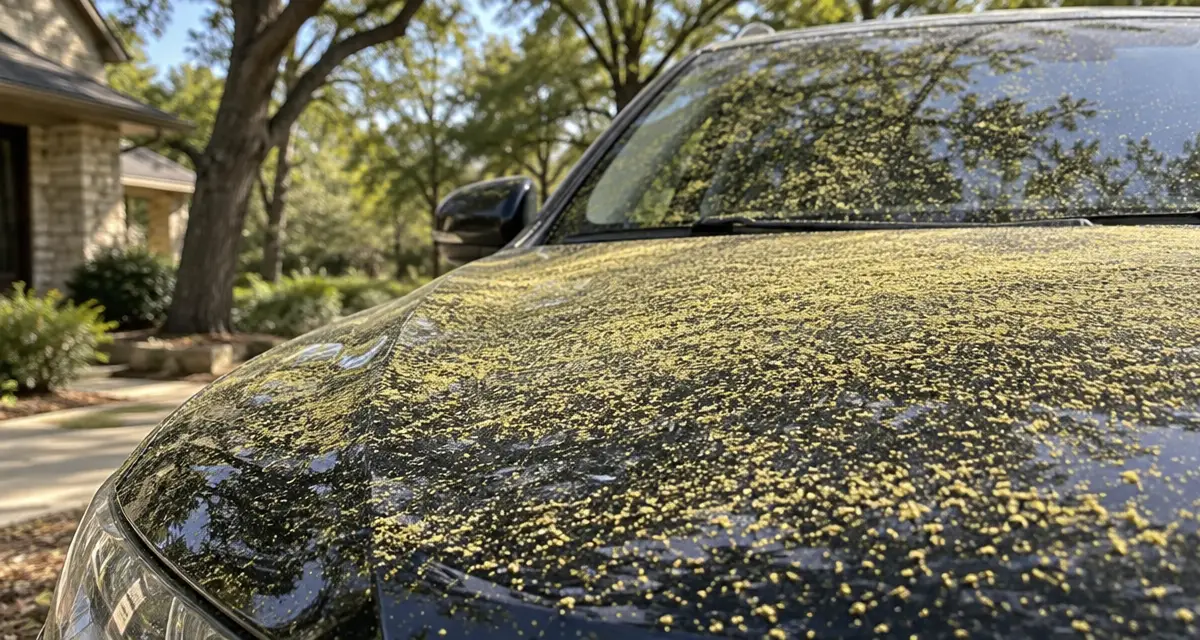
Every spring in Austin, a familiar yellow-green dust settles on everything that sits outside for more than a few minutes. Oak pollen season is here, and your car is likely wearing a thick coat. Before you grab a dry rag to wipe it off, stop! That fine pollen is highly abrasive and can easily scratch your vehicle's paint, so a proper oak pollen car wash is essential.
Safely removing pollen requires more than a quick wipe-down. It involves a gentle but thorough cleaning process to lift the particles away from the surface without causing damage. Let's explore the right way to protect your car's finish during the notorious Texas pollen season.
Why Oak Pollen Is a Problem for Your Car's Paint
That blanket of yellow dust might seem harmless, but it poses a real threat to your car's exterior. Oak pollen particles are microscopic but have a surprisingly abrasive texture. When you drag a dry cloth, a dirty automatic car wash brush, or even your hand across a pollen-covered surface, you're essentially rubbing fine-grit sandpaper against your paint. This action creates tiny scratches called swirl marks, which dull the finish and reduce your car's shine and value.
Beyond being abrasive, pollen can also become acidic when mixed with morning dew or rain. If left to sit, this mixture can slowly eat away at your car's clear coat, leading to permanent spots and etching. During the spring, when Texas allergies are at their peak, the constant onslaught of pollen means your car needs frequent and careful attention to prevent long-term damage.
The Right Way to Wash a Pollen-Covered Car
Removing a heavy layer of pollen requires a careful, methodical approach. The goal is to lift the particles off the paint, not grind them into it. Follow these steps for a safe and effective wash.
- Pre-Rinse Thoroughly: Before you touch the car with a mitt, use a hose to rinse the entire vehicle from top to bottom. This initial step will wash away the majority of the loose pollen and other debris, minimizing the risk of scratching when you begin the contact wash. If you're washing your car at home in Austin, remember to use a hose with a positive shutoff nozzle, as required by local water conservation rules.
- Use the Two-Bucket Method: Grab two buckets. Fill one with your car wash soap solution and the other with plain water for rinsing. After washing a small section of your car, rinse your dirty wash mitt in the plain water bucket before dipping it back into the soapy water. This simple technique prevents you from transferring abrasive pollen and grit back onto the car's surface.
- Wash Gently from Top to Bottom: Submerge a clean, soft microfiber wash mitt into your soap bucket and gently glide it over the car's surface in straight lines. Start with the roof and work your way down, saving the dirtiest parts (like the lower panels and bumpers) for last. Avoid applying heavy pressure.
- Rinse and Dry Immediately: Once you've washed all sections, give the car a final, thorough rinse to remove all soap residue. To prevent water spots, dry the vehicle immediately using clean, plush microfiber drying towels. Pat the surface dry or gently drag the towel across it rather than rubbing aggressively.
Protect Your Finish with Wax After Washing
A clean car is great, but a protected car is even better. Applying a quality wax is one of the most effective ways to shield your paint from pollen and other environmental contaminants. Wax creates a slick, hydrophobic barrier over your clear coat. This barrier not only adds a deep shine but also makes it harder for pollen, dirt, and water to stick to the surface, simplifying future washes.
According to automotive experts at AAA, you should wax your car two to four times a year to maintain a protective layer. After a thorough wash to remove pollen, it's the perfect time for a fresh coat of hand waxing. A critical tip is to never apply wax in direct sunlight or when the car's surface is hot, as this can cause the wax to dry too quickly and create a hazy, uneven finish. The best time is in a shaded area or during the cooler parts of the day.
When to Call the Detailing Professionals
Sometimes, a home wash isn't enough, or you simply don't have the time and tools to do the job safely. If the pollen has been sitting for weeks, is caked into crevices, or you're concerned about causing scratches, calling a professional is your best bet. A professional detailer has the right equipment, pH-neutral soaps, and techniques to safely remove the most stubborn pollen without harming your paint.
At Hill Country Shine, our professional exterior auto detailing service is designed to tackle challenges just like the heavy Austin pollen season. We provide meticulous care to ensure every abrasive particle is lifted away, leaving a perfectly clean and protected surface. We offer mobile detailing services in Bastrop and the surrounding communities, bringing the solution right to your driveway.
For a complete reset, consider a full interior detailing service as well. Pollen gets inside your vehicle through open windows and your HVAC system, settling on every surface and aggravating allergies. We can thoroughly vacuum, steam clean, and wipe down your interior to make it a pollen-free zone.
Frequently Asked Questions
How often should I wash my car during pollen season?
AAA suggests washing a vehicle every one to three weeks. During peak pollen season in Austin, it's wise to aim for a wash at least every one to two weeks to prevent buildup and potential damage to your paint.
Can I just wipe the pollen off with a dry cloth?
No, you should never do this. Pollen is abrasive, and wiping it with a dry cloth will grind the particles into your paint, causing fine scratches and swirl marks that are expensive to correct.
Will rain wash the pollen off my car?
Rain can rinse some of the pollen away, but it often isn't enough to remove all of it. Furthermore, rainwater can mix with pollen to create an acidic residue that, when evaporated, leaves concentrated spots that can etch your clear coat.