
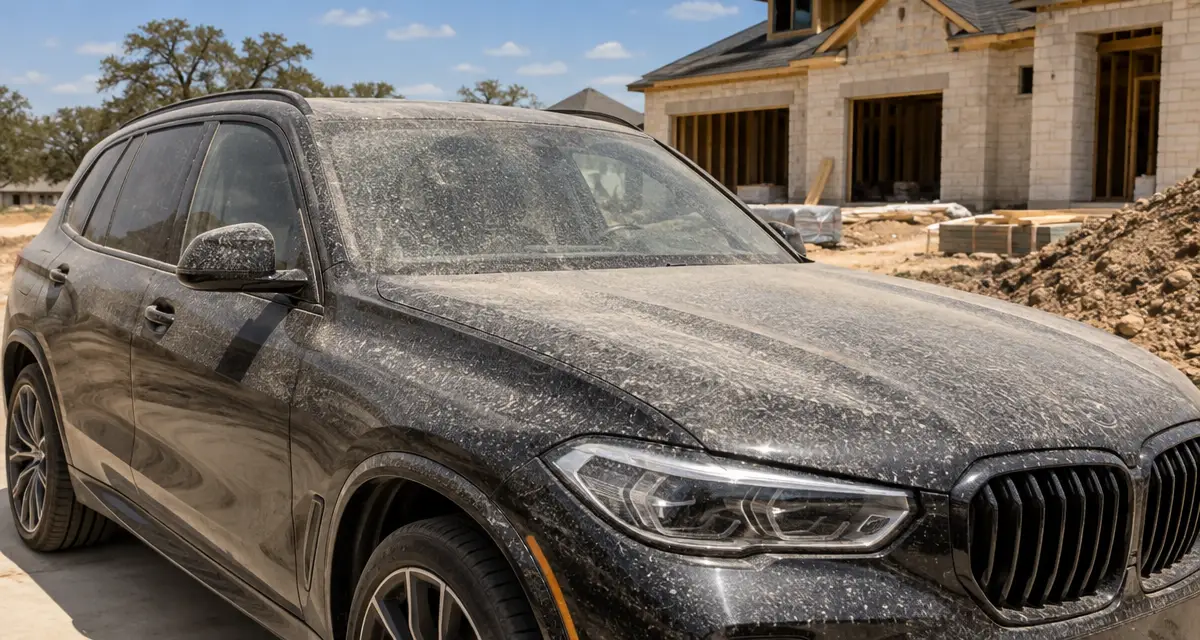
The key to removing construction dust from your car without scratching the paint is to rinse it off completely before touching the surface. This type of dust contains abrasive particles that will act like sandpaper if you try to wipe them off dry. A thorough pre-rinse with water followed by a careful hand wash is the only safe approach for your vehicle's finish.
With construction booming across Austin, Bastrop, and surrounding areas, it's almost impossible to avoid getting your car covered in a layer of fine, gritty dust. While it may seem harmless, it poses a significant threat to your paint's clear coat and overall appearance.
Why Is Construction Dust So Bad for Your Car's Paint?
Construction dust is far more damaging than typical road dust or pollen. It's a mix of abrasive materials like cement, silica, sand, and gypsum. When these tiny, sharp particles are dragged across your car's surface, they create microscopic scratches and swirl marks in the clear coat. Wiping a dusty car with a dry towel or even a quick detailer spray is one of the fastest ways to damage your paint.
Even the Texas Department of Transportation (TxDOT) identifies excavation and other construction activities as sources of what's called "fugitive dust." While job sites have measures to control it, this dust inevitably becomes airborne and settles on everything nearby, including your vehicle. If left on the surface, morning dew or a light rain can cause these particles to bond with the paint, making them even harder to remove safely.
Over time, the damage from improper dust removal dulls your car's shine and can lead to costly paint correction services to fix the widespread swirl marks and light scratches.
Safe At-Home Dust Removal Method
If you decide to tackle the job yourself, patience and the right technique are critical. Never take your car to an automatic car wash with brushes when it's covered in heavy dust, as the aggressive brushes will grind the particles into your paint. Follow these steps for a safer at-home wash.
- Pre-Rinse Thoroughly: Start by rinsing the entire vehicle from the top down. Use a pressure washer on a wide-angle, low-pressure setting, or a hose with a strong nozzle. The goal is to let the water do the work, gently lifting and carrying away as much of the loose dust and grit as possible before you ever touch the paint.
- Use a Foam Cannon: After the initial rinse, apply a thick layer of high-quality, pH-neutral car wash soap using a foam cannon. This foam clings to the surface, encapsulating the remaining dust particles and lifting them away from the paint. Let the foam dwell for several minutes, but don't let it dry on the surface.
- Rinse Again: Thoroughly rinse all the foam and loosened grime off your vehicle, again working from top to bottom.
- Two-Bucket Hand Wash: Now that the vast majority of abrasive material is gone, you can proceed with a safe hand wash. Use two buckets: one with your car soap solution and one with plain water for rinsing your wash mitt. Dunk the clean mitt in the soap, wash a small section of the car, and then rinse the mitt in the plain water bucket before putting it back in the soap. This prevents you from reintroducing dirt into your clean wash water.
- Dry Carefully: Use a large, plush microfiber drying towel. Instead of rubbing in circles, gently pat the car dry or lay the towel flat and slowly pull it across the panel. This minimizes friction and the risk of any lingering particles causing scratches.
When to Call a Professional Detailer in the Austin Area
Sometimes, a DIY wash isn't the best option, especially if the dust is extremely thick or has already caused visible scratching. A professional detailer has the specialized tools, products, and experience to handle the situation safely.
You should consider professional exterior auto detailing if:
- The dust layer is exceptionally heavy.
- You don't have access to a pressure washer or a safe washing area.
- The dust has made its way inside your vehicle's vents and upholstery.
- You can already see fine scratches or swirl marks in the paint.
For residents in areas like Bastrop, Elgin, or Manor, finding a trusted service that can come to you is a huge convenience. A quality mobile car detailing service can restore your vehicle's condition at your home or office, saving you time and ensuring the job is done right.
Protecting Your Car From Future Dust and Debris
Prevention is always better than correction. After your car is clean, applying a layer of protection can make future cleanups much easier and safer. A good quality car wax, paint sealant, or a durable ceramic coating creates a slick, hydrophobic surface.
This protective layer does two things. First, it makes it harder for dust and contaminants to stick to your paint. Second, when you do wash the car, the dust rinses off more easily, reducing the risk of scratching. A ceramic coating offers the longest-lasting and most robust protection against environmental fallout like construction dust.
When choosing a service, it's also important to know they follow local regulations. For example, Austin Water has specific guidelines for mobile car washes, including rules on water runoff and disposal. A professional company will be aware of and compliant with these local standards, as detailed in Austin Water's guidance for power washers.
Frequently Asked Questions
Can I just use a quick detailer spray to remove light construction dust?
It is not recommended. Quick detailer sprays are designed for very light, non-abrasive dust. Construction dust contains sharp particles that a simple spray and wipe will drag across the paint, causing scratches. Always opt for a full, water-based wash.
What if the construction dust got inside my car?
If dust has infiltrated your interior, a professional full interior detailing service is your best bet. Detailers use compressed air to blow dust out of tight spaces like air vents, specialized vacuums to pull it from carpets, and steam cleaning to ensure all surfaces are truly clean and your cabin's air quality is restored.
How often should I wash my car if I live near a construction zone in Bastrop or Austin?
You should wash your car as soon as you notice a significant layer of dust building up. Don't wait for weeks. The longer the dust sits, the higher the chance it will bond with the paint or cause damage during removal. A weekly or bi-weekly wash may be necessary to keep your car protected.