
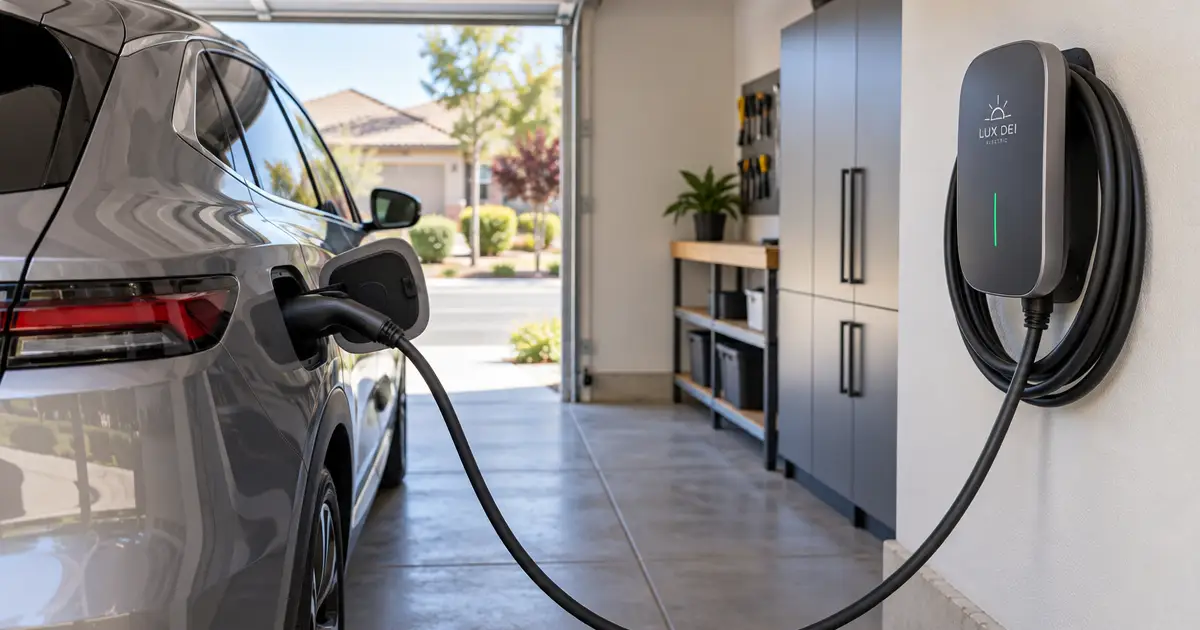
As more people in Rancho Cordova and the greater Sacramento area switch to electric vehicles, the convenience of charging at home is a top priority. Instead of planning your day around public charging stations, you can wake up every morning with a full battery. But that leads to the big question: what does it really cost to install a Level 2 EV charger at home?
The answer isn't a single number. The final price depends on several factors specific to your home and needs. This guide will break down the costs, explain how local rebates can help, and show why a professional installation is the only safe choice.
Understanding EV Charger Levels
First, let's clarify what we mean by a "Level 2" charger.
- Level 1 Charger: This is the basic cord that comes with most EVs. It plugs into a standard 120-volt wall outlet. While simple, it's also very slow, adding only about 2-5 miles of range per hour of charging. It's fine for occasional use but not practical for daily driving.
- Level 2 Charger: This is the most common and practical choice for home charging. It uses a 240-volt circuit, similar to an electric stove or dryer, and can add 10-60 miles of range per hour. This speed makes it easy to fully charge your vehicle overnight.
For a convenient and reliable home charging experience, a Level 2 charger is the way to go.
Key Factors Influencing Installation Cost
The total cost of your home EV charger project is a combination of the equipment price and the installation labor. Here are the main variables that will affect the final quote from an electrician.
1. Your Home's Electrical Panel
Your home's main electrical panel is the heart of its electrical system. A Level 2 charger requires a dedicated 240-volt circuit, which puts a significant demand on your panel. If your panel is older or already has many circuits in use, it might not have enough capacity to safely handle the new charger. The California Energy Commission notes that you might need to upsize your panel if it cannot handle the additional load. A licensed electrician will need to perform an assessment. If you need a main panel upgrade, this will be a significant factor in the overall project cost, but it's a critical upgrade for safety and for future-proofing your home.
2. Installation Location and Distance
Where do you want to install the charger? The ideal spot is in your garage, close to the electrical panel. The farther the charger is from the panel, the more materials (like heavy-gauge wiring and conduit) and labor will be needed to run the circuit. This increases the cost. Installing a charger outdoors on a driveway post will also typically cost more than a standard garage installation due to the need for weatherproof equipment and trenching to bury the wiring.
3. The Charger Unit Itself
Level 2 chargers are available from many brands, and their prices vary. Some are simple "plug-and-charge" units, while others are "smart" chargers with Wi-Fi connectivity, scheduling features, and energy monitoring apps. The cost of the hardware itself can range from a few hundred to over a thousand dollars, depending on the features you choose.
4. Permits and Inspections
A safe and legal professional EV charger installation in Rancho Cordova requires an electrical permit. The cost of the permit varies by municipality. The permit process ensures that the work is done to code and is inspected by a city official upon completion. This is a non-negotiable step that protects you, your family, and your property.
How SMUD Rebates Can Lower Your Costs
For residents in the Sacramento area, SMUD offers excellent incentives that can significantly reduce the cost of your EV charger installation. The SMUD Charge@Home program is designed to make home charging more accessible.
Here’s what you might be eligible for:
- Up to $600 in Incentives: Eligible customers can receive up to $600 toward the cost of equipment and installation. According to the program's terms and conditions, this can include up to $100 for a qualifying charger, up to $200 for smart equipment like a circuit-sharing device, and up to $500 for the circuit installation itself when done through their contractor network.
- Off-Peak Charging Discount: EV owners can also get a 1.5-cent discount per kilowatt-hour for electricity used during the off-peak hours of midnight to 6 a.m., helping you save money on charging every day.
- Income-Eligible Program: SMUD also offers a program where income-eligible single-family homeowners may qualify to receive a free Level 2 charger and installation.
Navigating these rebates can seem complicated, but a qualified electrician familiar with the SMUD programs can help you understand what you qualify for and ensure all requirements are met.
Why You Need a Professional Electrician
While it might be tempting to find a cheaper, DIY solution, installing a 240-volt circuit is not a project for a handyman or an amateur. The risks are too high.
- Safety: Working with high-voltage electricity is dangerous and can lead to fire, electrical shock, or damage to your home and vehicle.
- Code Compliance: A licensed electrician ensures the work is done according to the National Electrical Code (NEC) and local regulations. This is required for a passing electrical inspection.
- Warranty Protection: Many vehicle and charger manufacturers can void your warranty if the equipment is not installed by a qualified electrician.
- Peace of Mind: Knowing that your charger is installed correctly and safely allows you to charge your vehicle worry-free.
Ready to Charge at Home?
The cost of installing a Level 2 EV charger in Rancho Cordova varies, but investing in a professional installation is essential for safety and performance. By taking advantage of SMUD rebates and working with an experienced electrical contractor, you can make home charging an affordable and convenient reality.
At Lux Dei Electric, we specialize in safe and reliable EV charger installations. We can assess your home's electrical system, help you choose the right charger, and guide you through the SMUD rebate process. To get a clear, upfront estimate for your specific situation, contact Lux Dei Electric today!
Sources
- SMUD Residential Electric Vehicles: https://www.smud.org/Going-Green/Electric-Vehicles/Residential
- SMUD Charge@Home Incentive Terms and Conditions: https://www.smud.org/Going-Green/Electric-Vehicles/Charge-at-Home-application-page/Charge-at-Home-Terms-and-Conditions
- Homeowner and Renter Energy Resources by the California Energy Commission: https://www.energy.ca.gov/programs-and-topics/topics/building-decarbonization/building-and-home-energy-resource-hub/homeowner