
Can I Connect a Portable Generator to My Rancho Cordova Home Without Backfeeding?
Power outages are an unfortunate reality in California. Whether it's from storms, grid maintenance, or public safety power shutoffs, being without electricity can disrupt your life. For many Rancho Cordova homeowners, a portable generator seems like the perfect solution to keep the lights on, the refrigerator running, and phones charged. But how you connect that generator to your home is critically important.
A common but extremely dangerous shortcut is called “backfeeding.” This involves plugging the generator directly into a standard wall outlet. While it might seem like a clever way to power your house, it is illegal and poses a lethal risk to utility workers, your neighbors, and your own family. The short answer to the question is no, you cannot safely power your home's circuits with a generator without a proper isolating device. Let's explore why backfeeding is so hazardous and what the only safe method is.
What is Generator Backfeeding?
Backfeeding is the process of sending electricity from a portable generator back into your home’s wiring system and, from there, into the utility grid. This happens when someone uses a homemade double-male-ended extension cord (sometimes called a “suicide cord”) to connect their generator’s power outlet to a regular electrical outlet in their house, like the one you’d use for a lamp or a dryer.
The idea is to energize the entire home electrical panel, but it does so without any safety mechanisms in place. Your home’s electrical system is designed for power to flow in one direction: from the utility lines to your panel and then to your outlets. Backfeeding reverses this flow, creating a hazardous situation that extends far beyond your property line.
The Extreme Dangers of Backfeeding
Plugging a generator into a wall outlet is one of the most dangerous things a homeowner can do. Local authorities, including Sacramento County, strongly warn against this practice because the consequences can be catastrophic.
Lethal Risk to Utility Workers
This is the most significant danger. When your generator backfeeds into the grid, it re-energizes the power lines in your neighborhood. Utility workers who arrive to repair the downed lines believe they are de-energized and safe to work on. The electricity from your generator can travel through the transformer, stepping up the voltage to thousands of volts. A worker who touches a line they think is dead could be instantly electrocuted.
As guidance from Sacramento County clearly states, backfeeding “can electrocute utility workers or neighbors connected to the same utility transformer.” (Sacramento Ready) This alone is reason enough to never attempt it.
Fire Hazard and Damage to Your Home
Your home's wiring and your expensive electronics are not designed to handle power from an unregulated source like a portable generator. Backfeeding can overload circuits, cause wires to overheat, and start an electrical fire within your walls. It can also send power surges through your system, destroying sensitive electronics like televisions, computers, and modern kitchen appliances.
Risk to Your Neighbors
If a neighbor’s house is on the same utility transformer, the backfed power from your generator can travel into their home. This can damage their property and potentially cause injury. You could be held liable for any damage or injuries that result from your actions.
The Only Safe Method: A Transfer Switch
So, if you can’t plug a generator into an outlet, how do you safely power your essential circuits during an outage? The answer is a transfer switch.
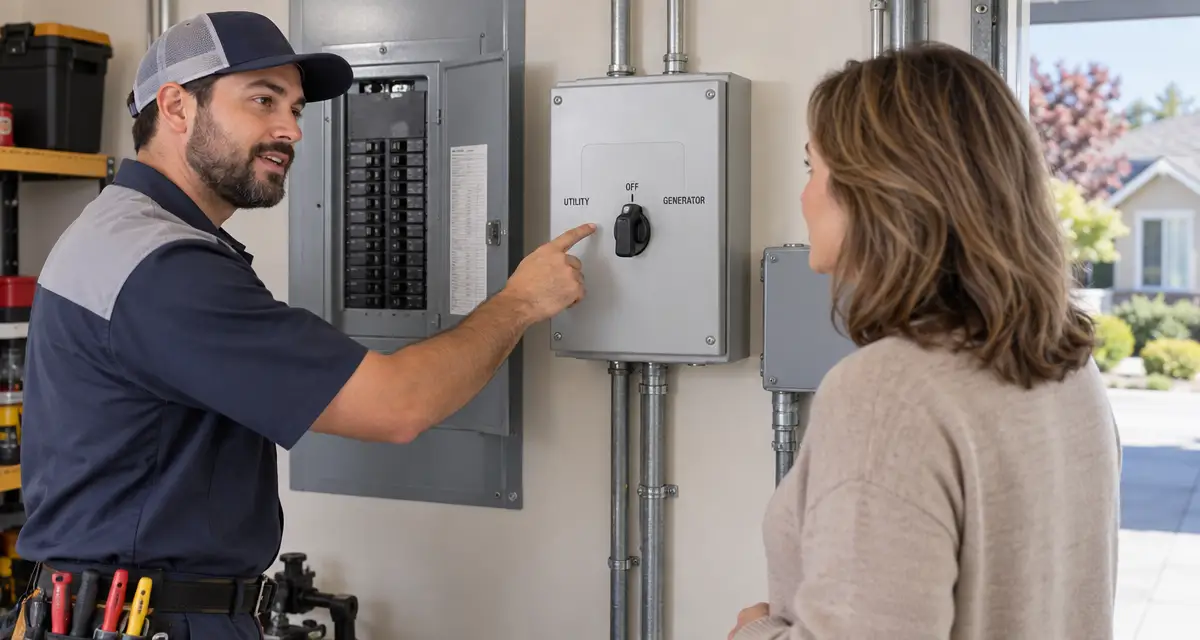
A transfer switch is a device that is professionally installed next to your main electrical panel. Its job is simple but crucial: it completely disconnects your home from the utility grid before it allows power to flow from your generator. This makes it physically impossible for your generator to backfeed electricity into the power lines, protecting utility workers and your home.
There are two main types of transfer switches:
- Manual Transfer Switch: This is the most common type for portable generators. During an outage, you manually flip a switch that disconnects your home from the grid and connects it to the generator inlet box. It allows you to select which specific circuits (like the refrigerator, a few lights, and an outlet for charging devices) you want to power.
- Automatic Transfer Switch (ATS): Usually used with permanently installed standby generators, an ATS detects a power outage automatically, starts the generator, and switches your home’s power source—all without you having to do a thing. When grid power is restored, it switches back and shuts the generator down.
For most Rancho Cordova homeowners using a portable generator, a manual transfer switch installation is the ideal solution for both safety and convenience.
Professional Transfer Switch Installation in Rancho Cordova
Installing a transfer switch is not a DIY project. It involves working directly with your home's high-voltage electrical system and requires a deep understanding of electrical codes and safety procedures. Only licensed electricians should perform this work.
At Lux Dei Electric, our licensed electricians can help you choose the right transfer switch for your generator and your home's needs. The process typically involves:
- Assessment: We evaluate your main electrical panel and discuss which circuits are most important for you to power during an outage.
- Installation: We install the transfer switch and an exterior power inlet box where you will plug in your generator.
- Demonstration: We walk you through the simple, safe process of switching your home to generator power.
With a professionally installed transfer switch, you gain the peace of mind that you can power your essentials safely and legally, without endangering anyone.
More Generator Safety Tips for Homeowners
Beyond having a transfer switch, follow these essential safety rules when operating your generator:
- Operate Outdoors Only: Never run a generator inside a home, garage, basement, or any enclosed space. Generators produce deadly, odorless carbon monoxide (CO). Sacramento County guidelines recommend placing the generator at least 20 feet away from your home with the exhaust pointing away from all doors, windows, and vents.
- Keep it Dry: Do not operate a generator in rain or snow. Protect it with a specially designed generator tent or cover, ensuring it remains well-ventilated.
- Refuel Safely: Turn the generator off and let it cool down completely before adding more fuel. Spilling gasoline on a hot engine can cause a fire.
- Use Heavy-Duty Cords: If you don't have a transfer switch, the only other safe method is to run heavy-duty, outdoor-rated extension cords directly from the generator to individual appliances. This is less convenient but avoids the dangers of backfeeding.
Your family’s safety is the top priority. During a power outage, it's tempting to find a quick fix, but when it comes to electricity, shortcuts can have devastating consequences. Protect your home, your property, and the lives of line workers by never backfeeding a generator. Instead, invest in the only approved, safe solution: a professionally installed transfer switch.
If you're ready to prepare your Rancho Cordova home for the next power outage, contact Lux Dei Electric today. We can provide a clear estimate and expert installation for a generator transfer switch.