
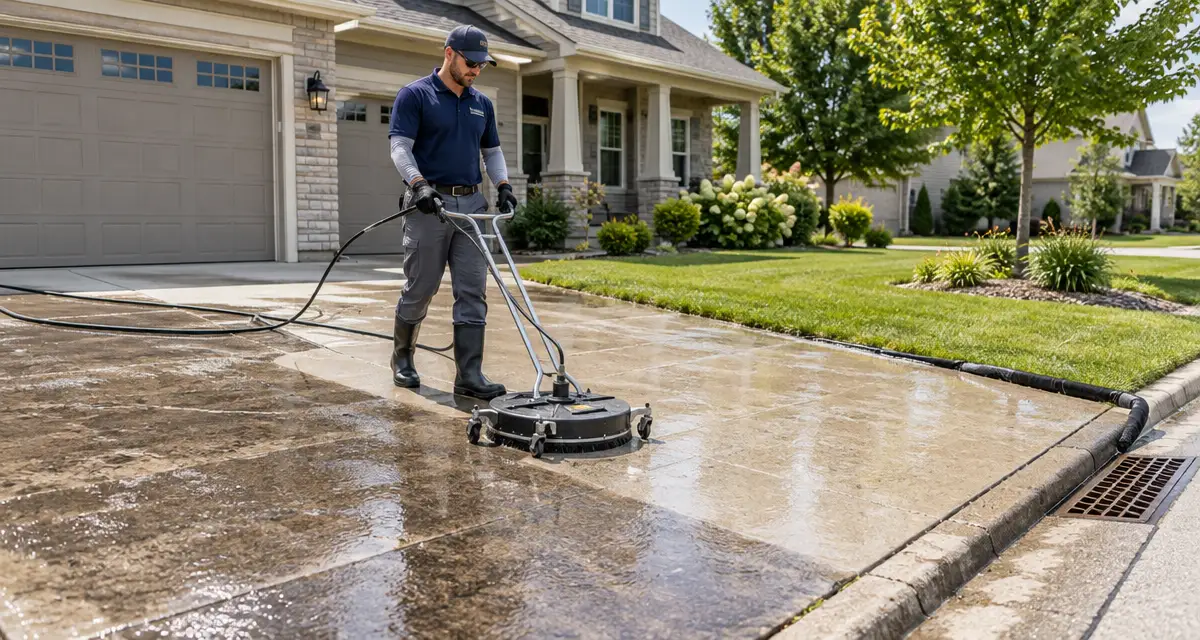
When you pressure wash your home's exterior, where does all that dirty water go? In the Green Bay area, runoff from your property enters storm drains that flow directly into local creeks, rivers, and ultimately the Bay of Green Bay. This direct connection means that any pollutants, including harsh cleaning chemicals, go straight into our natural water resources without any treatment.
Understanding local regulations is key to protecting our environment while keeping your property clean. This guide explains where pressure washing runoff goes in Green Bay and how to handle it responsibly.
Where Do Green Bay's Storm Drains Lead?
Many people believe that the water entering storm drains on the street goes to a water treatment plant. However, this is not the case for Green Bay's stormwater system. The city operates under a municipal separate storm sewer system (MS4) permit, which means the system is designed to prevent flooding by moving rainwater away from streets and properties quickly.
According to the City of Green Bay's Stormwater Utility, this system of pipes and drains discharges directly into our local waterways. This includes the Fox River, East River, and other streams that are vital to our community's ecosystem and recreational activities. What goes down the drain on your street ends up in the bay, making responsible water disposal a critical issue for every resident.
What's in Pressure Washing Runoff?
Pressure washing is incredibly effective because it uses high-pressure water to strip away built-up grime. But what exactly is in that wastewater? The runoff typically contains a mix of substances from the surface being cleaned.
Common components of pressure washing runoff include:
- Organic Matter: Dirt, mud, mold, mildew, and algae.
- Pollutants: Oil, grease, and other automotive fluids from driveways.
- Particulates: Sand, grit, and paint chips.
- Cleaning Agents: Soaps, detergents, degreasers, and chemicals like bleach.
While dirt and algae might seem harmless, they can cloud the water, harm aquatic life, and introduce excess nutrients that lead to harmful algal blooms. The chemicals are even more dangerous, posing a direct threat to fish, plants, and the overall health of our water system.
Green Bay Regulations on Stormwater Discharge
The City of Green Bay is clear about what is and isn't allowed in its storm sewer system. The 2024 Department of Public Works Information Guide explicitly states that the storm sewer is for stormwater only. It prohibits the disposal of chemicals or hazardous substances into the system.
Pouring wastewater containing detergents, bleach, or other harsh cleaners down a storm drain is a violation of these local guidelines. The primary goal is to protect the water quality of the Bay of Green Bay and its tributaries. As a homeowner, you are responsible for ensuring your cleaning activities don't contribute to water pollution.
Best Practices for Safe and Effective Pressure Washing
Fortunately, you can still achieve a sparkling clean exterior while protecting Green Bay's waterways. Following best management practices (BMPs) ensures your cleaning project is both effective and environmentally responsible.
Use Water Only When Possible
For light dirt and grime, a pressure washer with plain water is often enough to get the job done. This eliminates the risk of chemical runoff entirely. It's the simplest and safest method for many cleaning tasks.
Choose Eco-Friendly Cleaners
If you need more cleaning power, opt for biodegradable, phosphate-free detergents specifically designed for pressure washing. These cleaners break down more easily and have a much lower impact on the environment than harsh chemicals like chlorine bleach.
Protect and Divert Runoff
The most important step is to control where the water goes. Before you begin, block nearby storm drains with filter socks or berms. Whenever possible, divert the runoff water onto a flat, grassy area, a gravel patch, or other permeable surfaces on your property. The soil will act as a natural filter, trapping most of the contaminants before the water soaks into the ground.
Consider Water Reclamation
For larger projects, professionals often use water reclamation systems. These systems capture the wastewater, filter out the contaminants, and either reuse the water or dispose of it safely in a sanitary sewer drain (with proper permissions), not a storm drain. While this equipment is costly for a DIY project, it highlights the importance of containment.
Why Hire a Professional for Exterior Cleaning in Green Bay?
Navigating local regulations and implementing best practices can be complicated. Hiring a professional company for your professional pressure washing needs ensures the job is done correctly, safely, and in full compliance with Green Bay's environmental standards.
A reputable company like Oakwood Landscaping understands the local rules. We have the training and equipment to manage runoff effectively, protecting your property and our shared waterways. We use commercial-grade equipment that provides a superior clean for your driveway and sidewalk cleaning projects while using water efficiently.
Our team knows how to select the right pressure, nozzles, and cleaning solutions for each specific surface, preventing damage and delivering a lasting clean. By entrusting your project to experts, you save time, avoid potential fines, and gain peace of mind knowing your exterior cleaning services are contributing to a healthier Green Bay. Contact us today for a free estimate and to learn more about our environmentally conscious cleaning methods.
Frequently Asked Questions
Can I use bleach when I pressure wash my house?
Using chlorine bleach is strongly discouraged because it is highly toxic to plants and aquatic life. If it enters the storm drain, it can cause significant environmental damage. Professional cleaners use specially formulated, biodegradable alternatives that are both safe and effective.
Does all pressure washing water need to be collected?
Not always. If you are using water only and the runoff can be fully contained on your property's lawn or gravel areas, collection may not be necessary. However, if you are using any cleaning agents or if the runoff is flowing toward a storm drain, you must use containment and filtering methods.
What happens if I ignore the rules about runoff?
Allowing contaminated water to enter Green Bay's storm drains can lead to warnings or fines from the city. More importantly, it directly contributes to the pollution of the Fox River and the Bay of Green Bay, harming the local environment that we all enjoy.
Is it okay for the dirty water to go into my yard?
Yes, in most cases, diverting runoff to your lawn or landscaping is the preferred method. The soil and vegetation act as a natural filter. Avoid oversaturating any single area and be mindful of any cleaning agents you are using, as even biodegradable ones can harm sensitive plants in high concentrations.