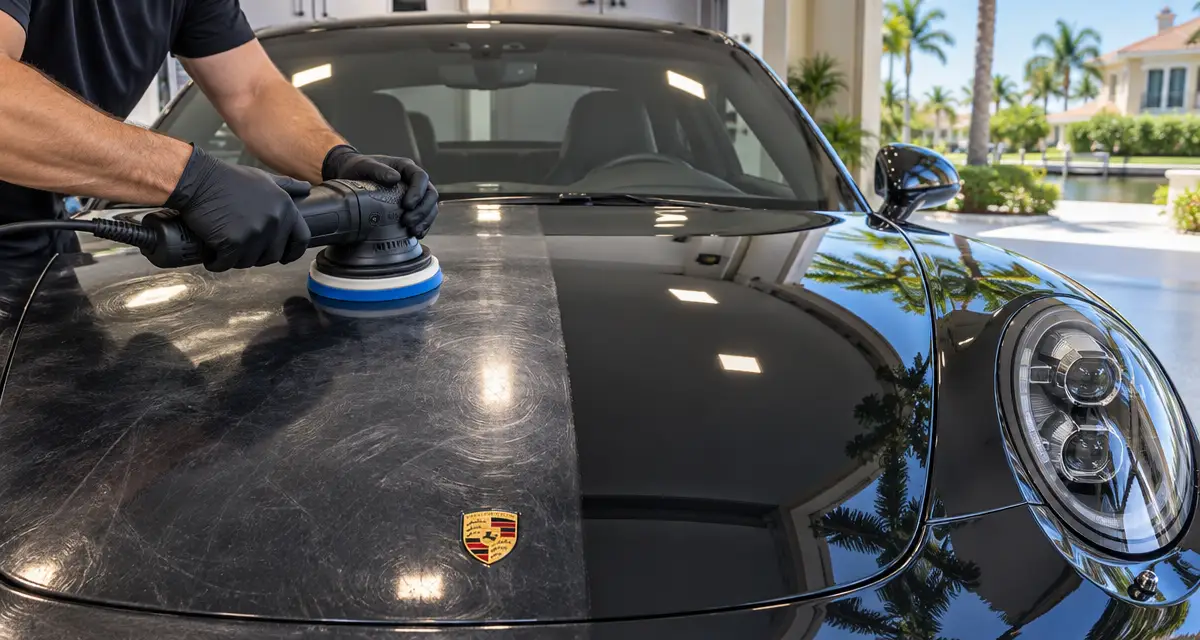
Yes, almost every vehicle requires some level of paint correction before a ceramic coating is applied. This crucial step removes imperfections like swirl marks and light scratches from your car's paint. A ceramic coating creates a semi-permanent bond with your paint and magnifies the surface underneath, so skipping paint correction means locking those flaws in, making them even more noticeable.
What Is Paint Correction?
Paint correction is a meticulous process of restoring and rejuvenating a vehicle's paintwork, going far beyond a standard wash or wax. It involves using specialized machines, various polishing compounds, and professional techniques to carefully level the clear coat, permanently removing imperfections. This isn't a cover-up; it's a permanent fix.
The goal is to eliminate common paint defects, including:
- Swirl marks (fine, circular scratches)
- Light to medium scratches
- Water spots
- Bird dropping etchings
- Oxidation and fading
- Holograms from improper buffing
By carefully removing a microscopic layer of the clear coat, a skilled technician can create a surface that is perfectly smooth, flat, and highly reflective.
Why Ceramic Coatings Demand a Perfect Surface
A ceramic coating is a liquid polymer that bonds chemically with your vehicle's factory paint, creating a durable, hydrophobic layer of protection. This bond is what gives the coating its longevity and protective qualities. For the bond to be strong and even, the surface must be completely clean and free of defects.
Think of it like painting a wall in your home. You wouldn't paint over dirt, dust, and scuff marks. You would clean and prep the wall first for a smooth, lasting finish. The same principle applies to ceramic coatings. Applying a coating over a flawed surface will not only fail to hide the imperfections but will actually highlight them under a glossy, semi-permanent shield.
Common Paint Imperfections Found in Naples
Living in Naples exposes our vehicles to unique environmental challenges that can take a toll on paint. According to the National Weather Service, South Florida's climate includes intense sun, high humidity, and a long rainy season. These factors contribute directly to paint damage.
- Intense UV Rays: The relentless Florida sun can cause paint to oxidize and fade, leaving it looking dull and chalky.
- Salt Air: If you live near the coast, the salty, humid air can accelerate corrosion on any exposed metal and degrade the clear coat over time.
- Lovebugs & Insects: The acidic residue from bug splatters can etch into your paint if not removed quickly.
- Hard Water Spots: Rain and sprinkler systems can leave behind mineral deposits that are difficult to remove and can etch the surface.
Even a brand-new car straight from the dealership often has imperfections. Swirls and fine scratches can be introduced during transport or from improper washing techniques at the dealership. A professional inspection is the only way to know for sure what your paint needs.
The Professional Paint Correction Process
Achieving a flawless finish before applying a ceramic coating is a multi-step journey that requires expertise, patience, and the right tools. Here’s what a professional process looks like:
- Decontamination Wash: The car undergoes a thorough hand wash, followed by a chemical and mechanical decontamination using iron removers and a clay bar. This removes all embedded contaminants that washing alone cannot.
- Paint Inspection: The vehicle is brought into a well-lit bay and inspected with specialized lights. This reveals every swirl, scratch, and defect that needs to be addressed.
- Masking: All sensitive areas like plastic trim, rubber seals, and emblems are carefully taped off to protect them from the polishing process.
- Multi-Stage Correction: This is the core of the process. A detailer will use a machine polisher with a combination of compounds and pads. This often starts with a more aggressive compound to remove deeper scratches (compounding) and is followed by a fine polish to refine the finish and create immense gloss (polishing).
- Surface Prep: After polishing, the vehicle is wiped down with a special solution to remove any polishing oils. This ensures the surface is perfectly bare and ready for the ceramic coating to bond effectively.
- Coating Application: Finally, the ceramic coating is meticulously applied panel by panel in a controlled environment.
Frequently Asked Questions
Will a ceramic coating hide scratches?
No, a ceramic coating will not hide or fill in scratches. Because it adds a layer of gloss and clarity, it will actually make existing scratches and swirl marks more visible. It is a protective layer, not a corrective one.
Does a brand new car need paint correction?
In most cases, yes. New cars accumulate swirl marks and fine scratches from factory handling, transit, and improper wash techniques at the dealership. A light polish is usually necessary to perfect the paint before applying a coating.
How is the right level of paint correction determined?
The required level of paint correction depends entirely on the current condition of your vehicle's paint. A professional installer will perform a detailed inspection to assess the damage and recommend the appropriate service, whether it's a light one-step polish or a more intensive multi-stage correction.
How do I maintain my car after a coating?
Proper maintenance is key to the longevity of your coating. This includes regular, safe hand washing and following the specific instructions provided by the coating manufacturer. Documents like the Ceramic Pro Aftercare Instructions outline best practices for keeping your coated vehicle in pristine condition.